The Complete Homeowner Checklist for Heat Pump Installation Kelowna
Choosing a new heating and cooling system is an important home improvement decision. For Kelowna homeowners, changing seasonal conditions make year-round comfort, system sizing, insulation, and energy efficiency important considerations. This checklist explains what to review before, during, and after heat pump installation Kelowna.
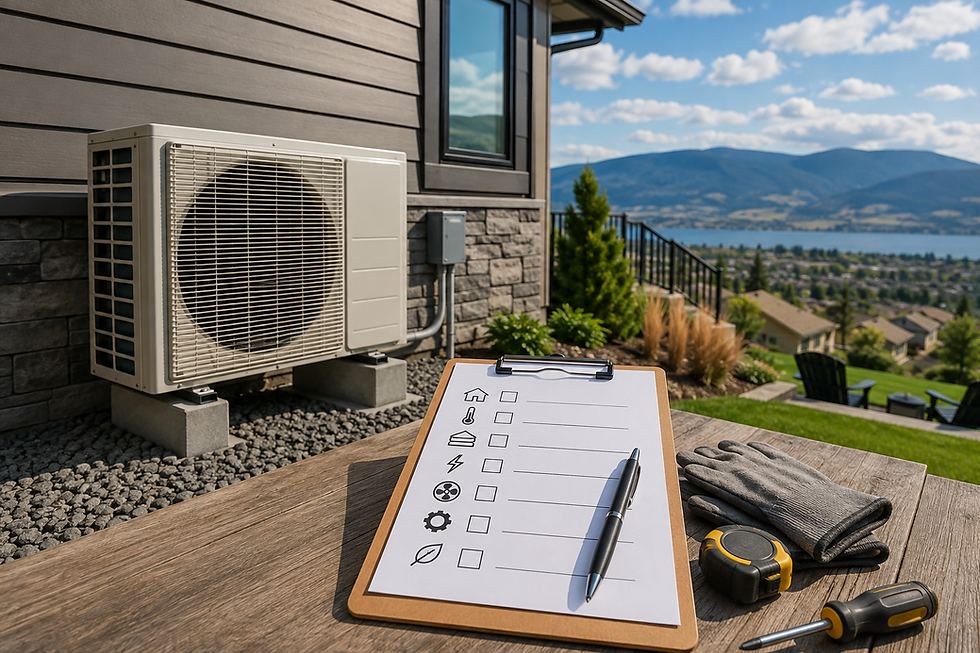
Assess Your Home’s Heating and Cooling Needs
Before planning a new heat pump installations in Kelowna, start by evaluating how your home performs throughout the year. Consider rooms that become uncomfortable during summer, areas that remain cold during winter, uneven temperatures between floors, and HVAC equipment that requires frequent repairs.
Home size, insulation, windows, air leakage, ceiling height, floor plan, and existing ductwork can all influence equipment selection. A qualified HVAC professional can assess these factors and determine an appropriate system capacity rather than simply matching the output of an existing furnace or air conditioner. Proper sizing matters because an unsuitable system may affect comfort, cycling, humidity management, and overall operation.
Review Your Existing HVAC Equipment
Take inventory of your current heating and cooling equipment before beginning the project. Record the approximate age and condition of the furnace, air conditioner, thermostat, ductwork, and other related components. Consider the equipment’s maintenance history as well. Frequent repairs or inconsistent cooling may indicate that it is time to evaluate alternative solutions.
Homeowners researching air conditioning in Kelowna can also compare the role of a conventional cooling system with a heat pump that can provide both heating and cooling. The right choice depends on the property's design, existing equipment, comfort requirements, and long-term home improvement plans.
Choose the Appropriate Heat Pump Configuration
Heat pumps are available in different configurations, including ducted and ductless systems. The appropriate design depends on the home's layout, existing ductwork, electrical capacity, heating requirements, and cooling needs. A ducted system may be appropriate for homes with suitable existing ductwork, while ductless equipment can provide targeted heating and cooling where extending ducts is impractical.
During heat pump installation, ask the contractor about:
System capacity
Heating and cooling output
Operating characteristics
Indoor and outdoor equipment
Thermostat compatibility
Ductwork requirements
Electrical requirements
Manufacturer specifications
The objective should be to select equipment that suits the property rather than simply choosing the largest available unit.
Evaluate Outdoor Unit Placement
The outdoor unit needs sufficient clearance and airflow to operate as intended. Its location should also allow reasonable access for future maintenance.
Before installation, consider:
Distance from windows and frequently occupied areas
Access for servicing
Snow and ice exposure
Drainage requirements
Airflow around the equipment
Clearance from walls and landscaping
Potential sound considerations
The installer should assess the property and select a location consistent with the equipment manufacturer's requirements and the home's physical characteristics.
Check Electrical Capacity
A heat pump may have electrical requirements that differ from an existing HVAC system. Before work begins, determine whether the electrical panel, circuits, wiring, and other components are appropriate for the proposed equipment.
If electrical modifications are required, understanding them early can make project planning easier. Ask for clear information about any electrical work included in the installation scope, including disconnects, wiring, controls, and related components.
Plan for Year-Round Cooling
A heat pump can provide cooling as well as heating, making it relevant to a homeowner's complete annual HVAC strategy. When comparing heat pump technology air conditioning in Kelowna, consider more than summer cooling. Review the home's heating requirements, existing equipment, insulation, comfort preferences, maintenance needs, and future HVAC plans.
If central air conditioning is already installed, ask a qualified professional whether a heat pump can integrate with the existing system or whether a different configuration would be more appropriate.
Consider Solar and Other Energy Improvements
HVAC equipment is only one component of household energy use. Homeowners planning broader improvements can also evaluate insulation, air sealing, windows, smart thermostats, controls, and renewable energy.
Solar energy may also be worth considering. Homeowners researching solar panels in Kelowna should evaluate roof orientation, usable roof area, shading, electricity consumption, structural considerations, and electrical requirements.
Online searches for solar panels for sale may show a wide range of products and service options. However, homeowners should compare more than the purchase price. Equipment specifications, system design, installation requirements, warranties, maintenance, and long-term support should all be considered. A whole-home energy assessment can help determine which improvements are appropriate for a particular property.

Understand Permits and Installation Requirements
Before installation begins, ask which permits, inspections, approvals, or other requirements may apply. Requirements can vary depending on the equipment, electrical work, property characteristics, and local regulations. A qualified contractor should explain the relevant requirements and identify any documentation that needs to be completed.
Homeowners should also request a written scope of work that identifies the proposed equipment, installation activities, included components, exclusions, and expected project timeline. Clear documentation can help both homeowners and contractors maintain the same understanding of the project.
Compare Heat Pump Installation Quotes
When comparing heat pump installations in Kelowna, avoid evaluating proposals based solely on the initial price. Review details such as:
Equipment make and model
Heating and cooling capacity
System configuration
Installation labour
Electrical work
Duct modifications
Thermostat or control system
Removal of existing equipment
Commissioning
Warranty terms
Follow-up service
A detailed quotation makes it easier to compare the actual scope and value of each proposal. Homeowners should also ask whether any additional work could affect the final project cost.
Ask About Maintenance
Like other mechanical HVAC equipment, a heat pump installation Kelowna requires appropriate maintenance. Homeowners should understand the manufacturer's recommended maintenance schedule and which tasks can be safely performed themselves.
Basic homeowner care may include checking or replacing filters as recommended, keeping the outdoor area around the unit clear, and watching for unusual changes in airflow, temperature control, or system operation. For professional servicing, homeowners may also research Kelowna air conditioning service providers that work with heating and cooling equipment.
Maintenance requirements vary according to equipment type, usage, manufacturer recommendations, and installation conditions. Professional service can help identify issues that require qualified attention.
Prepare for Installation Day
Preparing the property before installation can help the work proceed more efficiently. Clear access to indoor and outdoor equipment locations and move valuable or fragile items away from active work areas.
Before the installation date, ask about:
Expected arrival and completion times
Required access
Temporary interruptions to heating or cooling
Removal of old equipment
Installation noise
Post-installation cleanup
System commissioning
Thermostat operation
Owner orientation
After installation, the contractor should explain basic system operation and provide relevant equipment and warranty documentation.
Inspect the Completed Installation
Once the work is complete, review the installation with the contractor. Confirm that:
Indoor and outdoor equipment is securely installed.
Airflow is appropriate.
The thermostat and controls operate correctly.
Heating and cooling modes function as intended.
Drainage operates correctly where applicable.
Installation areas have been cleaned.
Equipment documentation has been provided.
Warranty information is available.
Maintenance requirements are understood.
Ask questions if anything about the equipment, controls, maintenance schedule, or installation remains unclear. Greenfoot Energy Solutions provides energy-focused services that can help homeowners explore heating, cooling, insulation, and other home energy considerations in the Kelowna area. When evaluating any HVAC or energy professional, homeowners should consider qualifications, applicable licensing, experience, written estimates, equipment specifications, warranty terms, and post-installation support.
Frequently Asked Questions
Is a heat pump suitable for Kelowna homes?
Heat pumps can provide both heating and cooling, but suitability depends on the home's design, insulation, electrical capacity, equipment selection, and system sizing.
Should insulation be upgraded before installing a heat pump?
If a home has inadequate insulation or significant air leakage, improving the building envelope may support more consistent indoor comfort and overall HVAC performance.
Are heat pumps suitable for older homes?
Older homes can use heat pump technology, but the electrical system, insulation, ductwork, existing heating equipment, and property layout should be evaluated first.
Can a heat pump use existing ductwork?
Ducted heat pumps can often use existing ductwork when it is appropriately sized and in suitable condition. A professional assessment can determine compatibility.
Should solar panels be considered with a heat pump?
Solar and heat pump technology can be evaluated together as part of a broader home energy strategy. Suitability depends on electricity use, roof conditions, system design, and project objectives.
What should homeowners ask before installation?
Ask about system sizing, equipment specifications, electrical requirements, installation scope, maintenance, warranty coverage, controls, and expected operating considerations.
Does a heat pump require regular maintenance?
Yes. Maintenance requirements vary by equipment and manufacturer, but homeowners should follow recommended filter, inspection, cleaning, and professional service schedules.
How should homeowners compare installation quotes?
Compare equipment, system capacity, installation scope, electrical work, controls, warranty terms, commissioning, and follow-up service rather than focusing only on the quoted price.
Conclusion
A successful heat pump project begins with careful planning rather than installation day alone. Assessing the home's heating and cooling requirements, checking insulation and air sealing, reviewing electrical capacity, selecting appropriately sized equipment, evaluating outdoor placement, understanding local requirements, comparing detailed quotations, and planning for maintenance can help Kelowna homeowners make informed decisions. A whole-home approach also provides an opportunity to consider related improvements such as cooling, insulation, smart controls, and solar energy while keeping comfort, efficiency, safety, and long-term suitability in focus.
Planning a heating and cooling upgrade for your home? Explore the Kelowna map location to learn more about available energy-efficiency services with professionals serving homeowners in the area.


Comments